What Is a Local SEO Audit? A Complete Guide for 2026
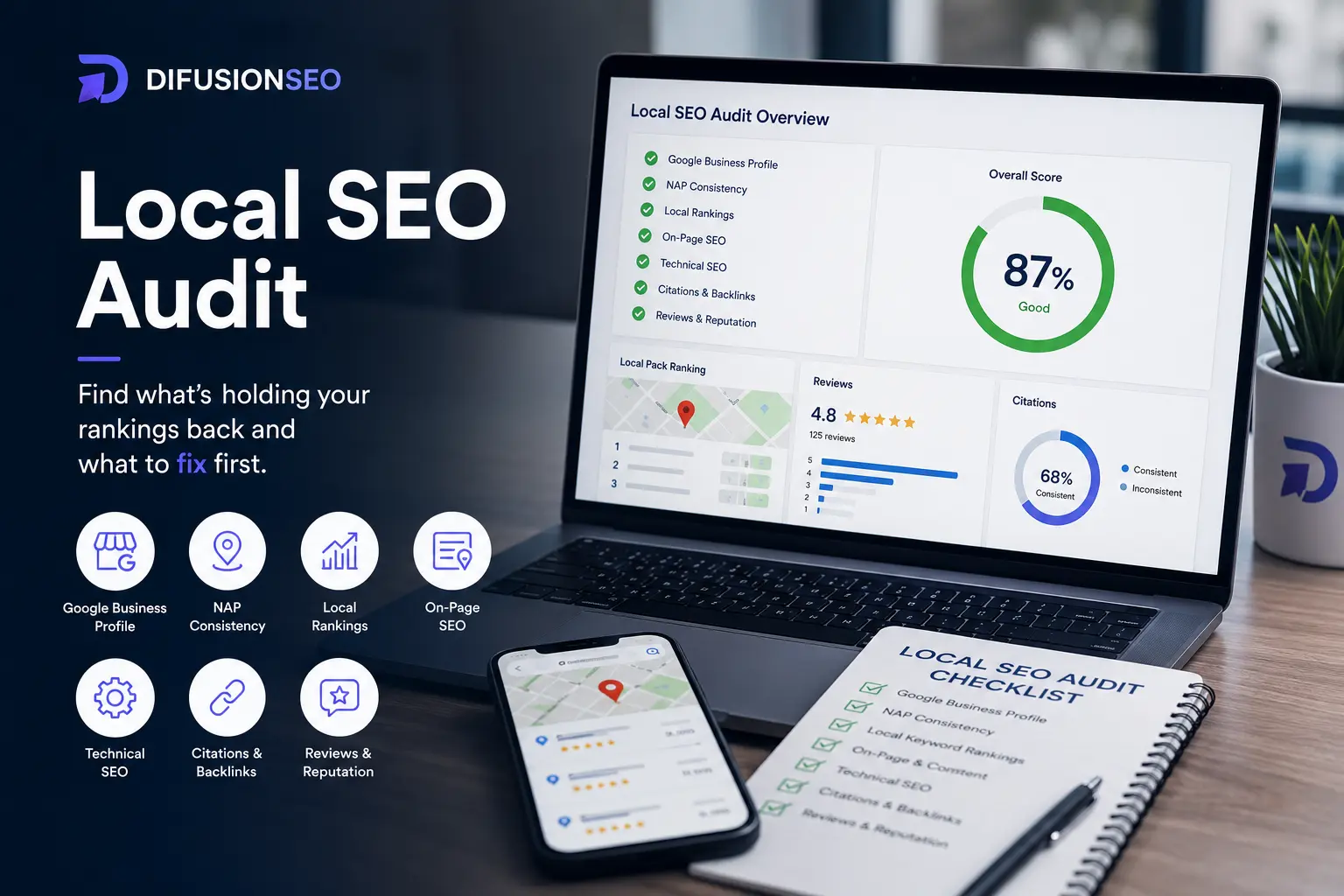
Learn what a local SEO audit is and how to run one step by step, covering Google Business Profile, NAP consistency, keyword rankings, technical SEO, citations, and reviews.
A local SEO audit is a structured review of every signal that affects how a business shows up in local search results, Google Maps, and the local map pack. It checks your Google Business Profile, your website, your citations, your reviews, and your backlinks to find what is holding your rankings back and what is helping them.
If you run a business that depends on nearby customers such as a clinic, a restaurant, a law firm, or a home service company, a local seo audit tells you exactly where you are losing visibility to competitors and what to fix first. If you would rather have this handled for you, our local SEO services team runs this exact process for clients every month.
Why a Local SEO Audit Matters
Search behavior has shifted heavily toward "near me" and location based queries. Google now blends traditional local pack results with AI Overviews and AI Mode answers, which means your business needs to be readable by both humans and language models.
Without regular audits, small problems compound quietly. A wrong phone number on one directory, a Google Business Profile that has not been touched in a year, or a missing schema tag can each shave off visibility that you never notice until a competitor overtakes you in the map pack.
What a Complete Local SEO Audit Covers
A thorough audit is not just "check Google Business Profile and move on." It should cover seven core areas.
1. Google Business Profile (GBP) Health Check
Your Google Business Profile is the single most important asset in local SEO because it feeds directly into the map pack, Google Maps, and the Knowledge Panel.
During this step, review:
- Business name, category, and description accuracy
- Complete and correct hours, including holiday hours
- Primary and secondary categories chosen correctly
- Photos and videos that reflect the current location
- Q&A section for outdated or spammy answers
- Posts and offers being published consistently
- Messaging and booking features turned on if relevant
Google has been known to allow public edits to listings, so it is worth checking every few months that nothing has been altered without your knowledge.
2. NAP Consistency Audit
NAP stands for Name, Address, and Phone number. Search engines cross reference your NAP details across the web to confirm your business is real and trustworthy, and Google itself confirms this directly affects your prominence in local ranking. Even small mismatches such as "St." versus "Street" can create confusion.
Run your business name through major directories including Yelp, Facebook, Apple Maps, Bing Places, and any industry specific directories relevant to your niche. Note every inconsistency and fix the highest authority listings first, since they carry more weight.
3. Local Keyword and Ranking Research
This part of the audit answers the question every business owner really wants answered: are we actually ranking for the terms that bring in customers?
Look at:
- Which keywords currently bring traffic and conversions
- Gaps in geographic coverage, such as ranking well in one neighborhood but not another
- Keywords sitting in positions four through ten that could move up with a small push
- New question based searches people are asking your industry, since these often surface in AI Overviews
4. On Page Content and Location Pages
Your content needs to clearly signal who you are, what you do, and where you do it. During an audit, check whether:
- Every service area has its own dedicated location page with unique content
- Each service has a standalone page rather than being buried in one general page
- Pages include natural local modifiers instead of the same keyword stuffed repeatedly
- Internal links connect related service and location pages logically
Thin or duplicated location pages are one of the most common reasons a local business plateaus in rankings. If your site structure was never planned properly from the start, our guide on how to build an SEO optimised website from scratch walks through fixing that foundation.
5. Technical SEO Check
Technical issues quietly cap how well even great content can perform. During this stage review:
- Crawlability and indexability of key pages
- Mobile usability, since most local searches happen on phones
- Page load speed
- Local business schema markup, which helps search engines and AI systems understand your business details directly from the code
6. Citation and Backlink Audit
Citations are mentions of your business across directories, and backlinks are links pointing to your website from other sites. Both act as trust signals. During this step:
- Identify toxic or spammy backlinks that could be dragging your domain down
- Find citation opportunities on local chambers of commerce, industry associations, or local news sites
- Check for duplicate or abandoned listings that split your authority
Building this kind of authority properly takes ongoing work, which is why it usually pairs well with a dedicated backlink building strategy.
7. Reviews and Reputation Audit
Review volume, recency, and your response rate all influence local pack placement. During the audit:
- Compare how many new reviews you received in the last thirty days against top competitors
- Check your response rate and how quickly you reply
- Read recent reviews for recurring complaints that point to real operational issues, not just SEO problems
How to Actually Do a Local SEO Audit Step by Step
-
Start with your Google Business Profile and fix any inaccurate information immediately.
- Pull your NAP data and cross check it across your top twenty directories.
- Export your current keyword rankings and flag gaps or dropped positions.
- Crawl your website for technical errors using a site audit tool.
- Review your last three months of customer reviews and your reply rate.
- Check your backlink profile for toxicity and missed citation opportunities.
- Document everything in a single spreadsheet so you can track changes over each future audit.
Best Tools for a Local SEO Audit
No single tool covers every part of a local audit, so most businesses combine two or three, such as a listing management platform, a rank tracker, and Google Search Console for indexing data straight from Google.
Free local seo audit tools are a reasonable starting point if you are testing the waters, but agencies managing multiple clients usually need a paid platform that consolidates listings, reviews, and rank tracking together, or a team that already runs this process daily.
How Often Should You Run a Local SEO Audit
A general rule is once a year at minimum. If local search drives a meaningful share of your revenue, a quarterly audit is a safer cadence, since it lets you catch ranking drops or listing errors before they cost you real customers.
Common Mistakes Found in Local SEO Audits
-
Treating the Google Business Profile as a "set and forget" listing
- Ignoring Google Maps rankings because they differ from standard search rankings
- Publishing one generic page for multiple service areas instead of unique location pages
- Skipping schema markup, which increasingly affects how AI powered search surfaces business information
- Chasing new backlinks while ignoring toxic ones already hurting the domain
Frequently Asked Questions
What is a local SEO audit?
A local SEO audit is a full review of a business's Google Business Profile, website, citations, reviews, and backlinks to identify what is helping or hurting its visibility in local search results and Google Maps.
How much does a local SEO audit cost?
Cost varies widely. A DIY audit using free tools costs nothing but time. Agency led audits typically range from a few hundred dollars for a basic review to over a thousand dollars for a full multi location audit with a detailed action plan.
How do I do my own local SEO audit?
Start with your Google Business Profile, check NAP consistency across directories, review your keyword rankings, run a technical site scan, and check your review activity. Free tools plus a spreadsheet are enough for a solid first pass.
How often should a local SEO audit be done?
At least once a year, though quarterly audits are recommended for businesses that rely heavily on local search traffic.
What tools are best for a local SEO audit?
A listing management tool, a keyword rank tracker, and a technical site audit tool together cover most of what a full audit requires.
Final Thoughts
A local seo audit is not a one time task, it is an ongoing habit that protects the visibility you have already earned. Businesses that audit regularly catch small problems, like an outdated GBP hour or a toxic backlink, before they turn into lost rankings and lost customers. Start with the checklist above, document your findings, and revisit it every few months to stay ahead of local competitors, or talk to our team if you would rather have it done professionally.
Discussion (0)
Leave a Comment
No comments yet. Be the first to start the discussion!
Related Insights.

How to Verify Your Google Business Profile: Complete Guide
Learn how to verify your Google Business Profile through phone, email, video, live call, or postcard. Covers every method, real timelines, and how to fix common verification failures.
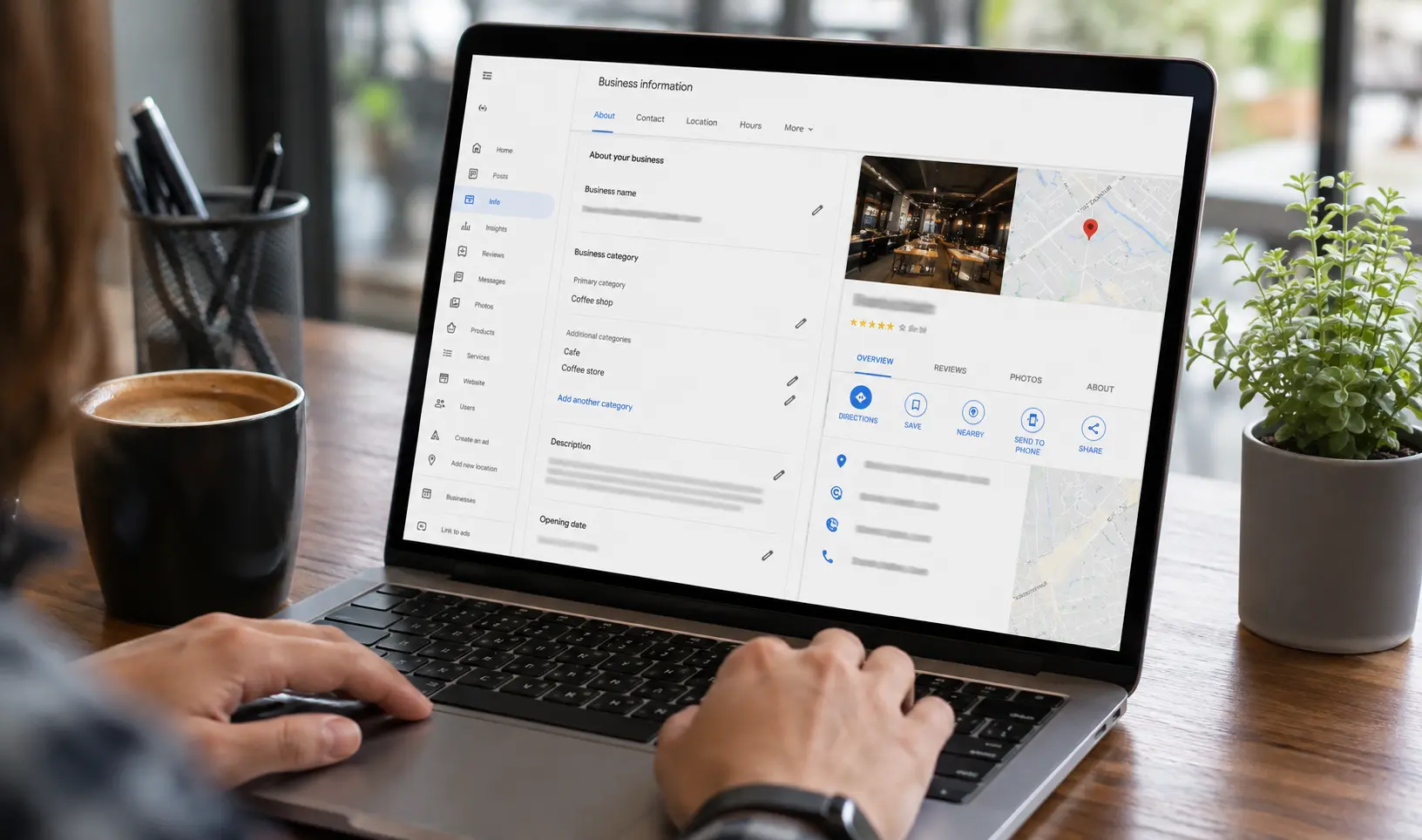
Google Business Profile Categories: A Complete Guide to Primary and Secondary Categories
Google Business Profile categories are one of the strongest local ranking signals you control. Learn the difference between primary and secondary categories, how many you can add, and how to pick the right ones to win the Local Pack.

Local SEO vs National SEO: The Core Difference
Local SEO and national SEO solve different problems for different businesses. This guide breaks down the ranking signals, real cost ranges in USD and EUR, timelines, and a side by side comparison table to help you choose the right strategy, or combine both.