How to Do Local Keyword Research From Scratch

Learn how to do local keyword research from scratch with a proven ten step process, free and paid tools, common mistakes to avoid, and a checklist you can reuse every time you expand.
Local keyword research is the process of finding the exact words and phrases nearby customers type into Google when they need a business like yours, then organizing those terms by service, location, and intent so you know exactly what to target on your website and Google Business Profile. Get this step wrong and everything built on top of it, your content, your location pages, your ad spend, ends up chasing the wrong searches.
This guide walks through the entire process from a blank page to a finished, prioritized keyword list, using the same logic our team at DifusionSEO relies on for local businesses across the US, UK, and EU, minus the jargon and the upsell.
Why This Matters More Than You Think
Nearly half of all Google searches carry local intent, which adds up to billions of local searches happening every single day. Local searches also carry unusually strong buying intent, with the majority of people who run a local search calling or visiting the business within a day. If your keyword list does not reflect how people actually search, competitors with a sharper list are collecting those calls instead of you.
Why Local Keyword Research Is Different From Regular Keyword Research
Standard keyword research asks what people search for. Local keyword research asks what people search for and where they are when they search it. A term like "emergency plumber" behaves completely differently depending on whether someone typed "emergency plumber Leeds," searched "emergency plumber near me" from their phone, or simply typed "emergency plumber" while Google quietly used their device location in the background.
This distinction matters because local searches carry unusually high intent. A large share of people who run a local search end up calling or visiting the business within a day. That is not a browsing audience, it is a buying one, which is exactly why getting the keyword targeting right pays off faster in local SEO than almost any other niche.
Step 1: Build Your Service and Location Matrix
Before opening any tool, list every service you offer and every location you serve. Do not stop at your job title. A plumber does not just do "plumbing," they handle water heater installation, drain unclogging, and burst pipe repairs. An electrician does not just do "electrical work," they handle panel upgrades, EV charger installation, and rewiring.
Do the same for locations. If you serve a city plus its surrounding suburbs, list each one individually rather than assuming your city name alone covers the area. Ten services multiplied by ten locations already gives you a hundred realistic keyword combinations before you have touched a research tool.
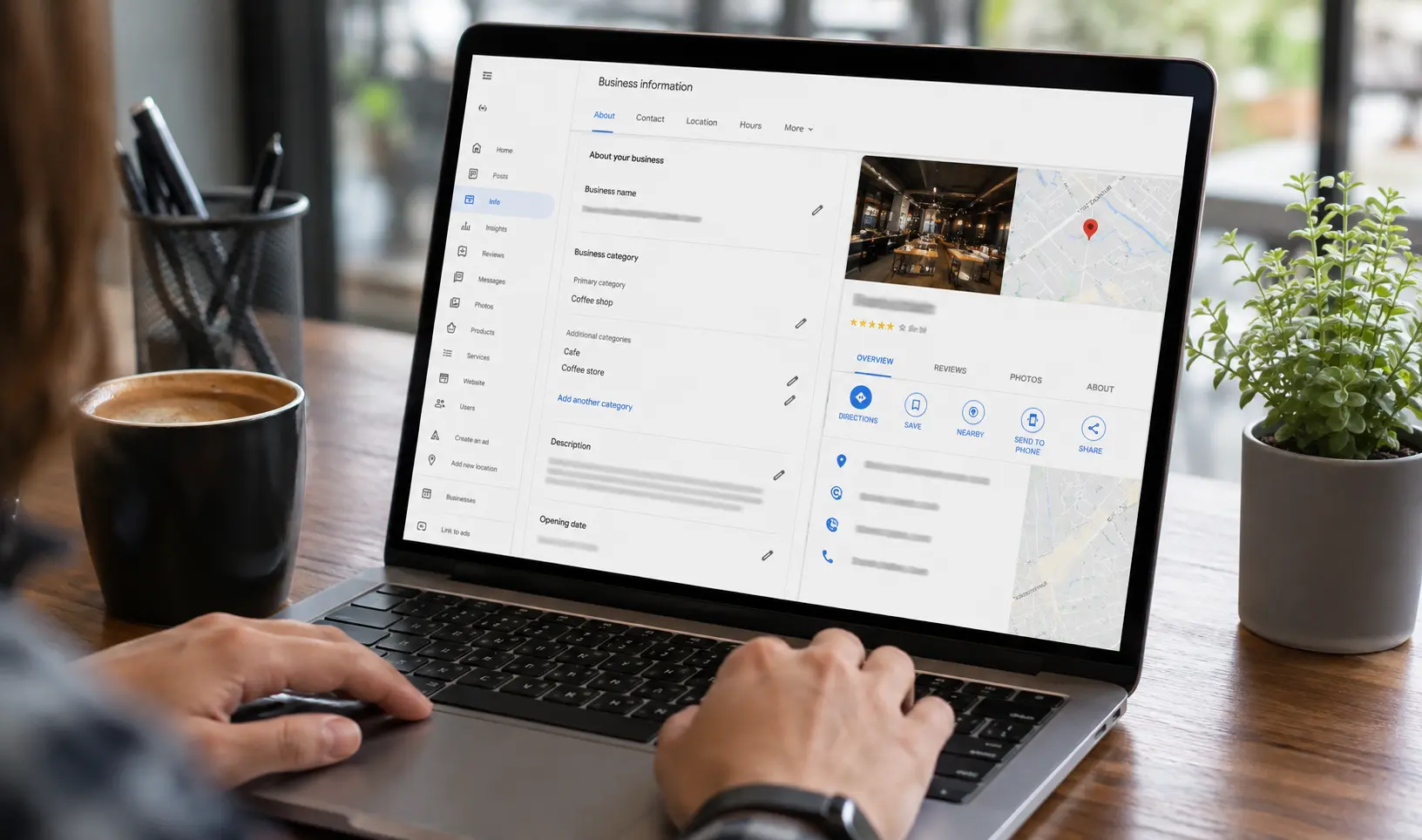
Pull straight from your Google Business Profile categories here too. Google shows you every category associated with your business type, which often surfaces services you offer but never think to describe as a distinct keyword. If you are still setting one up, our guide on what Google Business Profile is and why every local business needs one covers the basics before you start pulling categories from it.
Step 2: Think Like the Customer, Not the Business Owner
Business owners describe what they sell. Customers describe the problem they have. Someone with a leaking faucet is not searching "faucet repair services," they are searching "why is my faucet dripping" or "fix leaking tap." Someone with tooth pain is not searching "dental services," they are searching "tooth pain relief" or "emergency dentist open now."
Write down the actual problems your customers walk in with, in their own words, not the polished service names on your homepage. This single shift in perspective is what separates keyword lists that convert from keyword lists that simply look complete on paper.
Step 3: Mine Reviews for Real Language
Your own Google reviews, and your competitors' reviews, are one of the most underused sources of keyword data available. Customers describe experiences in plain language, and that language frequently matches search queries almost exactly. A review that says "fixed my clogged drain the same day" hands you the keyword "same day drain cleaning" without any guesswork.
Read through reviews on your Google Business Profile and on two or three top ranking competitors. If multiple reviewers mention the same phrase or concern, that repetition is a signal it reflects a common search pattern, not a coincidence.
Step 4: Use Google's Own Free Tools to Expand Your List
Once you have a starting list of seed terms, Google itself hands you free expansion ideas.
Autocomplete
Type a seed keyword into Google's search bar and note what it suggests before you finish typing. These suggestions come directly from real search behavior.
People Also Ask
These expandable question boxes reveal exactly what related questions searchers have, many of which make excellent blog or FAQ content.
Related Searches
Scroll to the bottom of any results page for a list of closely related terms people also search for.
Google Keyword Planner
Free through a Google Ads account, even without running ads. Enter your seed terms, set the location filter to your specific city or postal code rather than leaving it national, and review average monthly search volume alongside the top of page bid, which hints at commercial intent.
Free vs Paid Local Keyword Research Tools
| Tool | Cost | Best For |
|---|---|---|
| Google Autocomplete | Free | Quick real world phrasing ideas |
| Google Keyword Planner | Free | Search volume by exact city or postal code |
| Google Search Console | Free | Real queries already bringing you traffic |
| Ahrefs | Paid | Competitor keyword gaps, difficulty scoring |
| Semrush | Paid | Local keyword tracking, content gap analysis |
Step 5: Layer in Keyword Modifiers
Once you have a base list, expand it by combining services and locations with modifiers that reflect how people actually search.
Urgency modifiers include terms like emergency, same day, and 24 hour. Quality modifiers include best, top rated, and affordable. Proximity modifiers include near me, closest, and local. Neighborhood modifiers matter too, since locals often search using neighborhood names, nicknames, or landmarks rather than the formal city name, so include those variations if they apply to your market.
Step 6: Understand Explicit Versus Implicit Local Intent
Explicit local keywords name the location directly, such as "best divorce lawyer in Manchester." Implicit local keywords carry no location term at all, such as "divorce lawyer near me" or simply "divorce lawyer" typed by someone whose device location tells Google everything it needs to know.
Both categories matter, but they behave differently. Explicit keywords are easier to target directly with dedicated location pages, while implicit keywords depend heavily on your Google Business Profile accuracy and completeness, since Google leans on relevance, distance, and prominence to decide whether to show you at all.
Explicit vs Implicit Local Keywords at a Glance
| Type | Example | Best Used For |
|---|---|---|
| Explicit | best divorce lawyer in Manchester | Dedicated location pages, city specific content |
| Implicit | divorce lawyer near me | Google Business Profile accuracy, mobile search visibility |
| Explicit | emergency plumber Leeds | Service area pages, local landing pages |
| Implicit | emergency plumber tonight | GBP categories, attributes, and posts |
Step 7: Study What Competitors Are Already Ranking For
Search each of your seed keywords plus your city name, then study the top five ranking results. Note their page titles, the headings they use, and the specific services they mention that you might have overlooked. This is not about copying, it is about identifying gaps: services competitors rank for that you also offer but have never written a dedicated page or piece of content around.
Paid tools like Ahrefs or Semrush can speed this up by showing you the exact keywords a competitor's page ranks for, but you can get a workable picture manually using nothing but search results and a notepad if budget is a constraint.
Step 8: Account for How AI Search Is Changing Keyword Value
AI Overviews increasingly answer purely informational questions directly inside the search results, which reduces clicks on certain query types. But queries built around an action a searcher wants to perform, such as calculators, checkers, planners, and estimators, tend to resist this because AI summaries cannot replace an interactive tool. A local example might be "roof replacement cost calculator" or "moving cost estimator" for your city. These action based, tool oriented local keywords are often lightly contested and worth including in your list if they fit your services.
Step 9: Validate, Clean, and Prioritize
Once your list is built, remove duplicates and anything irrelevant, then group the remaining terms by service, location, and buyer intent, from informational research queries to ready to buy transactional ones. Prioritize keywords that combine reasonable search volume with lower competition first, since these tend to produce results faster than immediately chasing the broadest, most contested term in your industry.
If your business is brand new with no historical data, do not worry that you are starting blind. Within roughly ninety days of consistent activity, your own Google Search Console account will start showing you the exact queries people already use to find your listing, turning guesswork into real data you can act on.
Step 10: Map Keywords to Actual Pages
A keyword list is only useful once every term has a home. High priority service and location combinations should map to dedicated pages on your website. Question based and informational keywords should map to blog content or FAQ sections. Avoid the common mistake of trying to cram every keyword onto your homepage, since Google generally rewards focused pages over broad ones trying to rank for everything at once.
Common Local Keyword Research Mistakes to Avoid
Targeting only broad, high competition terms. Chasing "plumber" alone while ignoring long tail combinations like "water heater repair Sugar Land" means competing against every plumber in the region for a term that converts less precisely.
Stuffing "near me" into content manually. Google already understands implicit location intent through device signals, so repeating "near me" unnaturally throughout your copy adds no ranking benefit and reads poorly to visitors.
Ignoring service area nuance. Businesses that serve a wide radius but only optimize for their headquarters city miss every surrounding suburb where real demand exists.
Never revisiting the list. A keyword list built once and forgotten becomes outdated as neighborhoods grow, competitors shift focus, and search behavior evolves.
Skipping Google Search Console data. Businesses that already have some traffic often ignore the exact queries Google Search Console shows them, which is free, first party proof of what is already working.
Frequently Asked Questions
How many keywords should a local business target to start?
There is no fixed number, but a workable starting list usually falls between fifty and two hundred terms once you combine your core services, locations, and modifiers. Quality of match matters more than raw quantity.
Do I need paid tools like Ahrefs or Semrush to do local keyword research properly?
No. Google Autocomplete, People Also Ask, related searches, and Google Keyword Planner are all free and can produce a solid, workable keyword list on their own. Paid tools simply speed up the process and add competitive data.
Should I stuff "near me" into my page titles and content?
No. Google already understands implicit location intent using device signals, so manually repeating "near me" throughout your content provides little benefit and can look unnatural to readers.
How is local keyword research different from choosing Google Business Profile categories?
They are related but distinct. Keyword research shapes your website content and page structure, while categories shape how Google classifies your profile itself. Strong keyword research often reveals categories or services you had not considered listing on your profile.
How often should local keyword research be updated?
Revisit it at least once or twice a year, or sooner if you notice ranking changes, since search behavior, competitor positioning, and even neighborhood terminology can shift over time.
Ready to Turn This Keyword List Into Rankings?
Save this guide as your reference the next time you launch a new service or expand into a new city, since local keyword research is not a one time task but an ongoing part of staying visible.
Once your keyword list is built, the real work of turning it into ranking pages and a fully optimized profile begins, which is exactly what our Local SEO Services and Google Business Profile Optimization service are designed to execute.
Discussion (0)
Leave a Comment
No comments yet. Be the first to start the discussion!
Related Insights.

How to Verify Your Google Business Profile: Complete Guide
Learn how to verify your Google Business Profile through phone, email, video, live call, or postcard. Covers every method, real timelines, and how to fix common verification failures.
Google Business Profile Categories: A Complete Guide to Primary and Secondary Categories
Google Business Profile categories are one of the strongest local ranking signals you control. Learn the difference between primary and secondary categories, how many you can add, and how to pick the right ones to win the Local Pack.

Local SEO vs National SEO: The Core Difference
Local SEO and national SEO solve different problems for different businesses. This guide breaks down the ranking signals, real cost ranges in USD and EUR, timelines, and a side by side comparison table to help you choose the right strategy, or combine both.