What Is Google Business Profile and Why Every Local Business Needs One
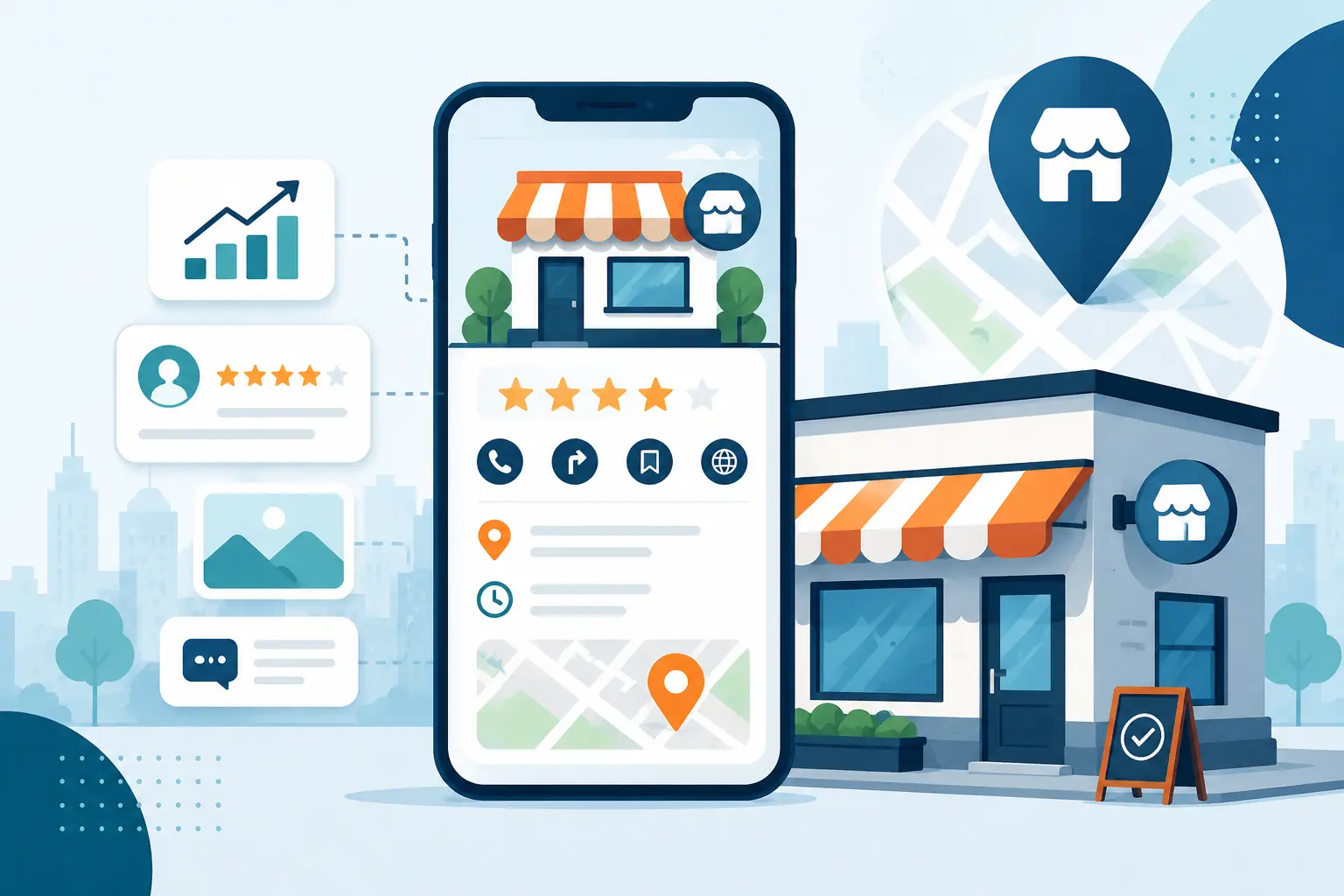
Google Business Profile is the free tool that decides how your business shows up on Google Search and Maps. Learn what it does, where it appears, and why skipping it means losing customers to competitors who claimed theirs.
Google Business Profile is a free listing that lets a business control how it appears on Google Search and Google Maps, showing details like its name, address, phone number, hours, photos, and reviews directly in the search results without requiring a website visit. If you run a local business and you have not claimed yours, you are handing your customers over to whoever did.
That is the short answer. Now let us get into what actually makes this tool so important, because most business owners set it up once, forget about it, and never realize how much revenue is quietly slipping through the cracks.
What Google Business Profile Actually Does
Think of Google Business Profile, often shortened to GBP, as a live control panel that connects your business directly to the search results. Formerly called Google My Business, it was rebranded in 2021 and folded directly into Google Search and Maps, meaning you no longer need a separate app to manage it.
When someone searches for a plumber nearby, a coffee shop downtown, or a specific business by name, Google pulls information from GBP listings to decide which businesses to show, in what order, and with what details. Your profile becomes the data source Google relies on to answer that search.
This is different from your website. A website is something people have to actively click into. A Google Business Profile shows up right inside the results themselves, which means a large share of your customers may never visit your site at all before deciding to call, message, or walk in.
Where a Google Business Profile Shows Up
A single verified profile can appear in several places at once, each with a slightly different purpose.
The Local Pack. This is the group of three business listings that appears with a map when someone searches something like "electrician near me." Getting into this pack is often the single biggest driver of calls and visits for a local business.
Google Maps. When someone searches directly within Maps, your profile determines whether you show up and how you compare to nearby competitors on distance, rating, and relevance.
The Knowledge Panel. If someone searches your business name specifically, your profile populates the panel on the right side of the results, complete with your hours, photos, reviews, and a direct line to message or call you.
Google's organic results. Even outside the map pack, elements of your profile such as your star rating can appear alongside your normal search listing.
What Information Lives Inside Your Profile
A complete Google Business Profile is built from several sections, and each one plays a role in how Google understands and ranks your business.
Your business name, address, and phone number, commonly referred to as NAP, form the foundation. Beyond that, you can add your primary and secondary categories, business hours including holiday hours, a written description, your website link, photos and videos, a list of products or services, and attributes that describe things like accessibility features or payment options.
Then there is the layer that keeps building over time: customer reviews, questions and answers, booking links, and Google Posts, which work like small updates you can publish directly to your listing.
None of this costs anything to set up. That is part of what makes it such an unusual advantage. You are not paying for placement the way you would with ads. You are earning it through completeness, accuracy, and ongoing activity.
Why Every Local Business Needs a Google Business Profile
It Is Often the First and Only Impression a Customer Gets
A large portion of local searches end without a single click to any website. The searcher gets what they need directly from the profile: the hours, the phone number, the reviews, the photos. If your profile is missing or incomplete, you are not just losing a click, you are losing the entire interaction before it starts.
It Directly Shapes Your Local Search Rankings
Google decides who appears in local results using three main factors: relevance, distance, and prominence. Relevance measures how well your profile matches what someone searched for. Distance measures how close you are to the searcher. Prominence reflects how well known and well reviewed your business is, both on Google and across the web. A thin, outdated, or unclaimed profile gives Google very little to work with, which makes it harder to compete no matter how good your actual business is.
It Builds Trust Before Anyone Talks to You
Consumers routinely avoid businesses after reading negative reviews or seeing an empty, photo-less listing. A profile with recent reviews, real photos, and accurate information signals that a business is active and legitimate. An abandoned profile signals the opposite, even if the business itself is thriving.
It Works as an Interactive Storefront, Not Just a Listing
Customers can message you, ask questions, request a booking, or get directions without ever leaving the search page. Every one of those actions is a chance to convert a searcher into a customer in real time, something a static website listing simply cannot replicate.
It Feeds the AI Tools Customers Are Increasingly Relying On
AI powered search features and assistants pull from public profiles and review data when they summarize or recommend local businesses. A business with a thin or inactive profile gives these systems little to work with, while a complete, regularly updated one gives them exactly what they need to describe and recommend to you accurately.
It Is Required for Certain Google Advertising Features
If you plan to run Local Service Ads or want your business to appear with location extensions in Google Ads, a verified Google Business Profile is a prerequisite, not an optional add on.
Google Business Profile Versus a Business Website
A common misconception is that a website makes a Google Business Profile unnecessary, or the reverse. They serve different jobs. Your website is where you control the full story, from detailed service pages to your own SEO strategy. Your Google Business Profile is where most first impressions happen and where Google decides whether to introduce you to a nearby customer in the first place. The strongest local businesses treat the two as connected parts of the same system rather than competing priorities. If you have not yet built a website designed with search visibility in mind, it is worth starting with the fundamentals before layering your Google Business Profile on top.
How to Know If You Actually Need One
If your business has a physical location customers visit, or you provide services within a defined geographic area even without a storefront, a Google Business Profile is essential. The only businesses that can reasonably skip it are those with no local component at all, such as a fully online business with no service area and no walk-in customers. For nearly everyone else, not having one means competitors with a claimed and optimized listing are capturing the searches that should have been yours.
Frequently Asked Questions
Is Google Business Profile really free?
Yes. Creating, verifying, and managing a Google Business Profile costs nothing. You can optionally run paid ads that connect to it, but the profile itself is free.
Is Google Business Profile the same as Google My Business?
They are the same tool. Google renamed Google My Business to Google Business Profile in 2021 and moved management directly into Search and Maps instead of a separate app.
How long does it take for a new profile to show up in search results?
Once verified, most profiles begin appearing within a few days, though full visibility in competitive local results depends on how complete and active the profile is over time.
Does a Google Business Profile replace the need for a website?
No. It complements a website rather than replacing it. Many customers will still visit your site for deeper information, but your profile is frequently what gets them there in the first place.
Can a service area business without a storefront still create a profile?
Yes. During setup, you can hide your address and instead define the specific areas you serve, which is standard practice for contractors, cleaners, and other mobile service providers.
If you are ready to move beyond simply having a profile and want it actively working to bring in local customers, that is exactly where Local SEO Services and Google Business Profile Optimization make the difference between a listing that exists and one that performs
Discussion (0)
Leave a Comment
No comments yet. Be the first to start the discussion!
Related Insights.

How to Verify Your Google Business Profile: Complete Guide
Learn how to verify your Google Business Profile through phone, email, video, live call, or postcard. Covers every method, real timelines, and how to fix common verification failures.
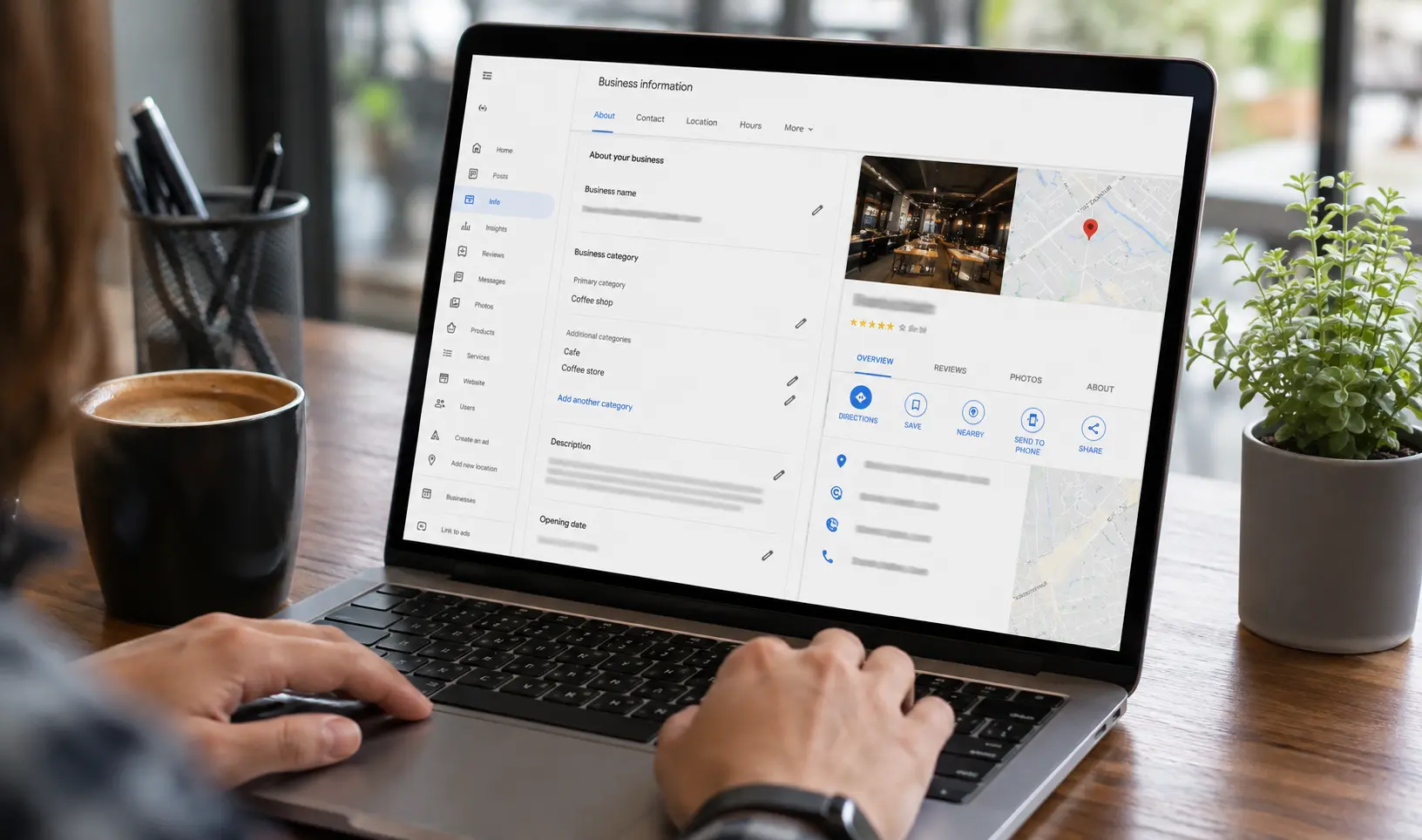
Google Business Profile Categories: A Complete Guide to Primary and Secondary Categories
Google Business Profile categories are one of the strongest local ranking signals you control. Learn the difference between primary and secondary categories, how many you can add, and how to pick the right ones to win the Local Pack.
Local SEO vs National SEO: The Core Difference
Local SEO and national SEO solve different problems for different businesses. This guide breaks down the ranking signals, real cost ranges in USD and EUR, timelines, and a side by side comparison table to help you choose the right strategy, or combine both.