How to Build an SEO-Optimised Website From Scratch
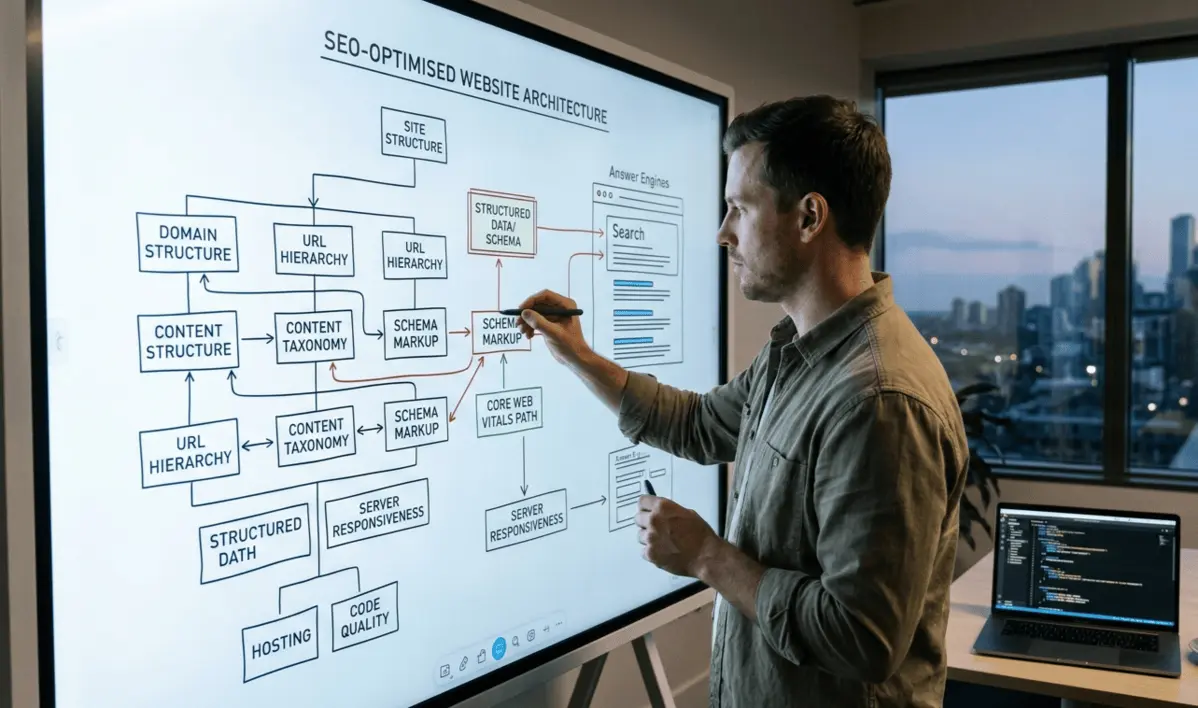
Learn how to build an SEO-optimised website from scratch with the right domain, hosting, architecture, technical SEO, Core Web Vitals, content strategy, and backlinks.
Building an SEO-optimised website from scratch means making the right decisions before you write a single word of content or choose a colour palette. The architecture, the hosting, the domain structure, the code quality, every one of these decisions either compounds your rankings or quietly works against them. Most guides tell you to "add keywords" and "get backlinks." This one starts where success actually begins: at the foundation.
Whether you are launching a new business, rebuilding a site that never ranked, or starting a side project you want Google to take seriously, this guide walks you through every layer of the process in the order it actually needs to happen.
Why Most New Websites Fail at SEO Before They Even Launch
The single biggest mistake website owners make is treating SEO as something they bolt on after the site is built. You publish pages, then try to optimise them. You pick a theme, then wonder why it loads slowly. You choose a domain name without thinking about topical authority, then scramble to fix your structure six months later.
Google's ranking systems, including the Helpful Content system, PageRank, and Core Web Vitals scoring, evaluate signals that are baked into your website's foundation. If that foundation is weak, no amount of content or link building will fully compensate for it.
Answer engines like ChatGPT, Perplexity, and Google AI Overviews add another dimension entirely. They do not just read your words. They parse your site structure, your schema markup, your entity relationships, and the clarity of your answers. A site built without these in mind is invisible to a growing segment of searchers who never click a traditional result link at all.
The good news is that building correctly from the start takes no more time than building incorrectly. It just requires knowing what "correctly" looks like.
Step 1: Choose a Domain Name That Supports Your Strategy
Your domain name is not just a web address. It is a long-term signal to both users and search engines about what your site covers and who it is for.
Exact match domains were once powerful but are now largely neutral. Google has shifted focus toward brand authority and trust signals instead of keyword-heavy domains.
Step 2: Select Hosting That Does Not Limit Your Performance
Hosting directly impacts your SEO performance, especially page speed and uptime.
Shared hosting can slow down your website and hurt rankings. A better option is managed cloud hosting with CDN support.
Content Delivery Network (CDN) helps deliver content faster by serving users from the nearest server location.
Step 3: Plan Your Information Architecture Before Writing Anything
Information architecture defines how your pages are structured and connected.
A strong structure improves crawlability and helps search engines understand your website topics.
Step 4: Choose a CMS or Framework That Supports SEO
Your CMS affects how easily you can implement SEO best practices like metadata, schema, and clean URLs.
Step 5: Conduct Keyword and Topic Research
Keyword research helps you understand user intent and build content around real search demand.
Step 6: Configure Technical SEO Foundations
Technical SEO ensures search engines can properly crawl and index your website.
This includes robots.txt, XML sitemaps, canonical tags, HTTPS, and schema markup.
Step 7: Optimize Core Web Vitals
Core Web Vitals measure page speed, responsiveness, and visual stability.
Improving these metrics increases both rankings and user experience.
Step 8: Build Pages With On-Page SEO
On-page SEO ensures each page is optimized for a specific keyword and search intent.
You can use professional SEO Services to improve your on-page optimization strategy.
Step 9: Build Content That Answers Questions
Modern SEO requires content that directly answers user questions in a clear and structured way.
Step 10: Build Internal Linking Structure
Internal links distribute authority across your website and improve navigation.
Step 11: Build a Backlink Strategy
Backlinks remain one of the strongest ranking signals in SEO.
Start with a strong Link Building strategy to build authority from day one.
Step 12: Set Up Analytics and Tracking
Use tools like Google Analytics and Google Search Console to track performance and identify issues early.
Additional Services to Scale Your Website
For long-term growth, combine SEO with development and local targeting strategies.
Final Thoughts
Building an SEO-optimised website is not about quick hacks. It is about strong foundations, clean structure, and consistent execution.
When done correctly, every part of your website works together to build long-term search visibility and authority.
Discussion (0)
Leave a Comment
No comments yet. Be the first to start the discussion!