Google Local Ranking Factors Explained: Relevance, Distance, and Prominence
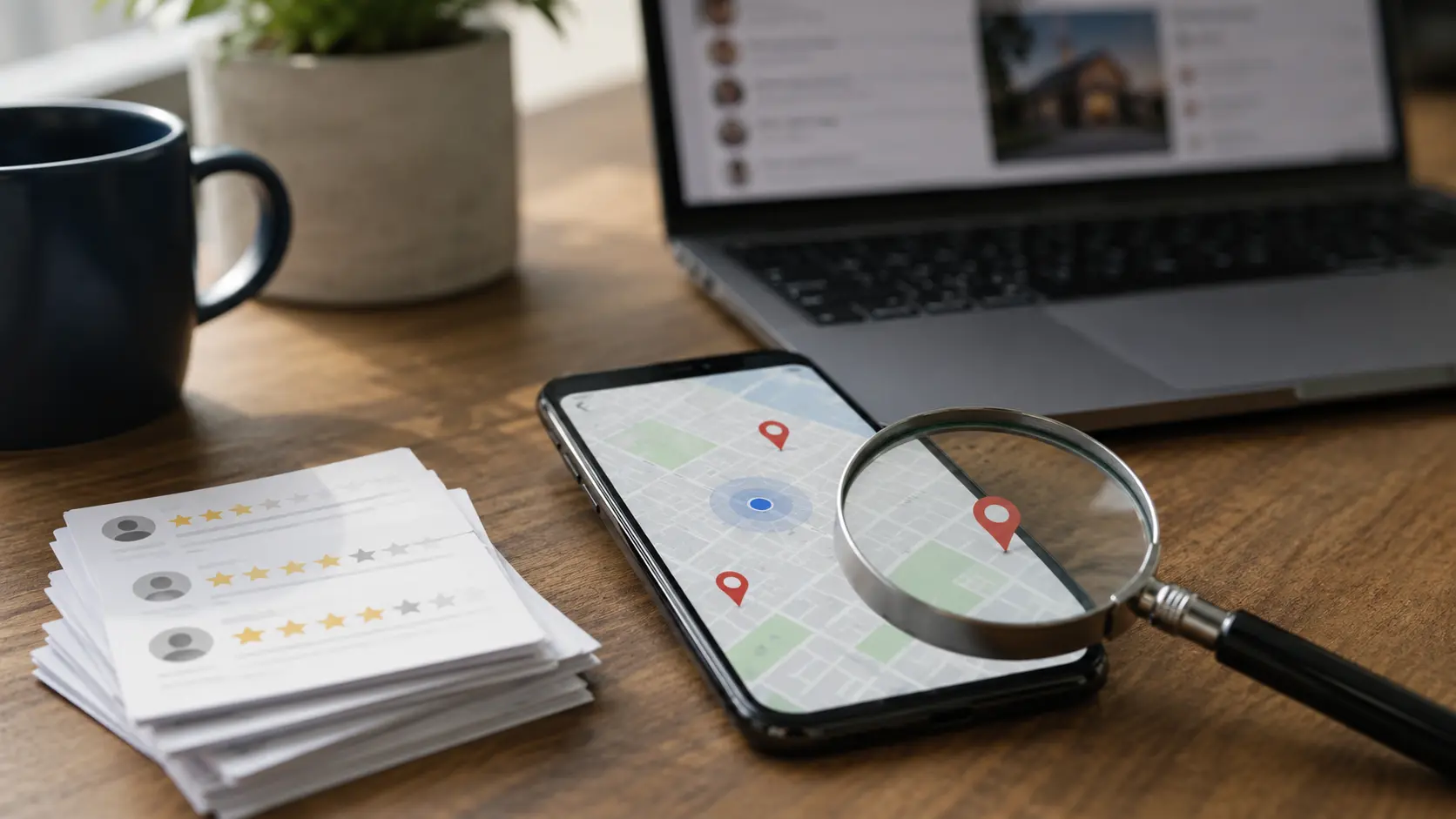
Google ranks local businesses using three signals: relevance, distance, and prominence. Learn what each factor means, how Google measures it, and what you can actually influence to rank higher.
Google ranks local businesses using three core factors: relevance, distance, and prominence, and these three signals together decide which businesses appear in the Local Pack, Google Maps, and local organic results for any given search. Understand how each one works, and you stop guessing why a competitor with a worse product still outranks you.
Let us break down exactly what each factor means, how Google actually measures it, and what you can realistically influence versus what is simply out of your control.
What Are Local Ranking Factors, Exactly
When someone searches for something like "bakery near me" or "divorce lawyer downtown," Google is not just matching keywords. It is running a local algorithm that weighs three separate signals for every nearby business, then blends them into a single ranking. Google itself has confirmed these three pillars directly in its own documentation, which makes this one of the few areas of SEO where you are not relying purely on guesswork or industry speculation.
The three factors do not carry equal weight in every search, and that is where most confusion comes from. A search with no location typed in behaves differently than a search that includes a neighborhood name. Understanding the mechanics of each factor is what separates businesses that consistently show up from businesses that rank well one month and disappear the next.
Relevance: How Well You Match the Search
Relevance measures how closely your Google Business Profile matches what the searcher actually typed. This is the factor most similar to traditional SEO, since it depends heavily on the information you provide and how well it aligns with search intent.
What Google Looks At for Relevance
Google evaluates your business categories, the words used in your business description, the services or products you have listed, and the content found in your reviews and Q&A section. A business that selects an accurate primary category and fills in detailed, specific information gives Google far more to work with than one that leaves fields blank or picks a broad, generic category just because it sounds impressive.
How to Improve Relevance
Choose the most specific primary category available rather than the broadest one. A "family owned Italian restaurant" is more precisely captured by a niche category than by simply selecting "restaurant." Add secondary categories only when they genuinely apply, since irrelevant categories can dilute how clearly Google understands your core business. Fill out every available field completely, including services, products, and attributes, and make sure your website content uses the same terminology customers actually search for, not just internal industry jargon.
Reviews also feed relevance. When customers naturally mention specific services in their reviews, such as "best emergency plumber" or "great vegan menu options," that language reinforces what your business is relevant for, in a way that carries more weight than the same words appearing only in your own description.
Distance: How Close You Are to the Searcher
Distance refers to the physical proximity between the business and either the searcher's actual location or the location implied in their search query. Of the three factors, this is the one you have the least direct control over, since you cannot move your storefront to be closer to every customer.
How Google Calculates Distance
If someone searches "coffee shop" without typing a location, Google defaults to their device's current location or location history. If someone searches "coffee shop in Manchester," Google shifts to ranking businesses relative to that specified area instead of the searcher's literal position. This is why a business can rank well for searches that include its city name even while ranking lower for generic "near me" searches from people standing farther away.
What You Can Actually Influence
While you cannot relocate your business, you can influence how Google interprets your service coverage. For service area businesses without a public storefront, accurately defining your service areas within your Google Business Profile settings tells Google exactly where you are willing to operate, which affects which searches you are eligible to appear in at all. Keeping your address information precise and verified also matters, since even minor inconsistencies can confuse how Google places you on the map.
Businesses with multiple locations should resist the temptation to create a single profile covering an entire city. A dedicated, individually verified profile for each physical location gives Google a clean, accurate distance signal for every branch rather than one blended, less accurate one.
Prominence: How Well Known and Trusted You Are
Prominence reflects how well established, respected, and recognized your business is, both online and in the offline world. This is the factor most within your long term control, and it is also the one that takes the longest to build.
The Signals That Shape Prominence
Google weighs the quantity and quality of your reviews, how you respond to them, the number and quality of websites linking to yours, how consistent your business information is across directories and citation sources, and your overall visibility across the web. A restaurant with hundreds of positive, recent reviews and consistent mentions across food blogs and local directories carries far more prominence than a nearly identical restaurant with five reviews and no outside mentions, even if both are equally close to the searcher.
Building Prominence Over Time
Actively request reviews from satisfied customers rather than hoping they leave one unprompted, and respond to every review, positive or negative, since engagement itself is a signal Google tracks. Build citations across reputable, industry relevant directories with identical name, address, and phone number details everywhere they appear. Earn backlinks from local news outlets, community organizations, and industry publications rather than low quality directories that add little real authority. Traditional web presence still matters here too, since your organic search visibility and general online reputation both feed into how prominent Google considers your business to be.
Which Factor Matters Most
There is no fixed percentage Google assigns to each factor, and the balance shifts depending on the search itself. For broad, high competition searches like "pizza," prominence tends to carry significant weight because Google has many nearby options to choose from and needs a way to separate the trusted from the unproven. For narrow, specific searches like "24 hour pizza delivery near me," distance and relevance often take priority since the searcher has already signaled exactly what they need and where.
The practical takeaway is that neglecting any single factor creates a ceiling on your rankings, even if you are strong in the other two. A business with excellent reviews and strong citations but a vague, poorly categorized profile will still lose to a more precisely optimized competitor for specific searches.
How AI Search Is Changing the Weight of These Factors
As AI powered features like AI Overviews become more common in search results, the underlying data these systems rely on is largely the same information that has always fed relevance, distance, and prominence, just processed differently. Structured, accurate on page content, consistent citations, and a steady stream of genuine reviews now do double duty, feeding both the traditional local algorithm and the AI systems summarizing local options for searchers. Businesses that have already built strong signals across all three ranking pillars tend to translate that strength into AI generated summaries with far less additional effort than businesses starting from a thin, inconsistent profile.
Frequently Asked Questions
What are the three main local ranking factors on Google?
Relevance, distance, and prominence. Google has confirmed these directly as the core signals used to rank businesses in local search results and Google Maps.
Which local ranking factor is easiest to improve quickly?
Relevance tends to respond fastest, since completing your business categories, description, and services gives Google clearer signals almost immediately. Prominence typically takes the longest, since it depends on reviews and citations accumulating over time.
Can a business rank well even if it is farther from the searcher?
Yes. A business with strong relevance and high prominence can outrank a closer competitor that has a thin, inconsistent, or poorly optimized profile.
Does having multiple locations hurt prominence?
No, as long as each location has its own accurately verified profile. Combining multiple locations into a single listing or creating unauthorized duplicate profiles tends to dilute signals rather than strengthen them.
Do backlinks still matter for local search rankings?
Yes, though their relative weight has declined compared to reviews and on page optimization in recent years. Quality backlinks from relevant, local, or industry specific sources still contribute meaningfully to prominence.
If your Google Business Profile is complete but still is not showing up where it should, the gap is usually in how these three factors are being managed together rather than any single fix. That is exactly the kind of diagnostic work involved in proper Google Business Profile Optimization and ongoing Local SEO Services
Discussion (0)
Leave a Comment
No comments yet. Be the first to start the discussion!
Related Insights.

How to Verify Your Google Business Profile: Complete Guide
Learn how to verify your Google Business Profile through phone, email, video, live call, or postcard. Covers every method, real timelines, and how to fix common verification failures.
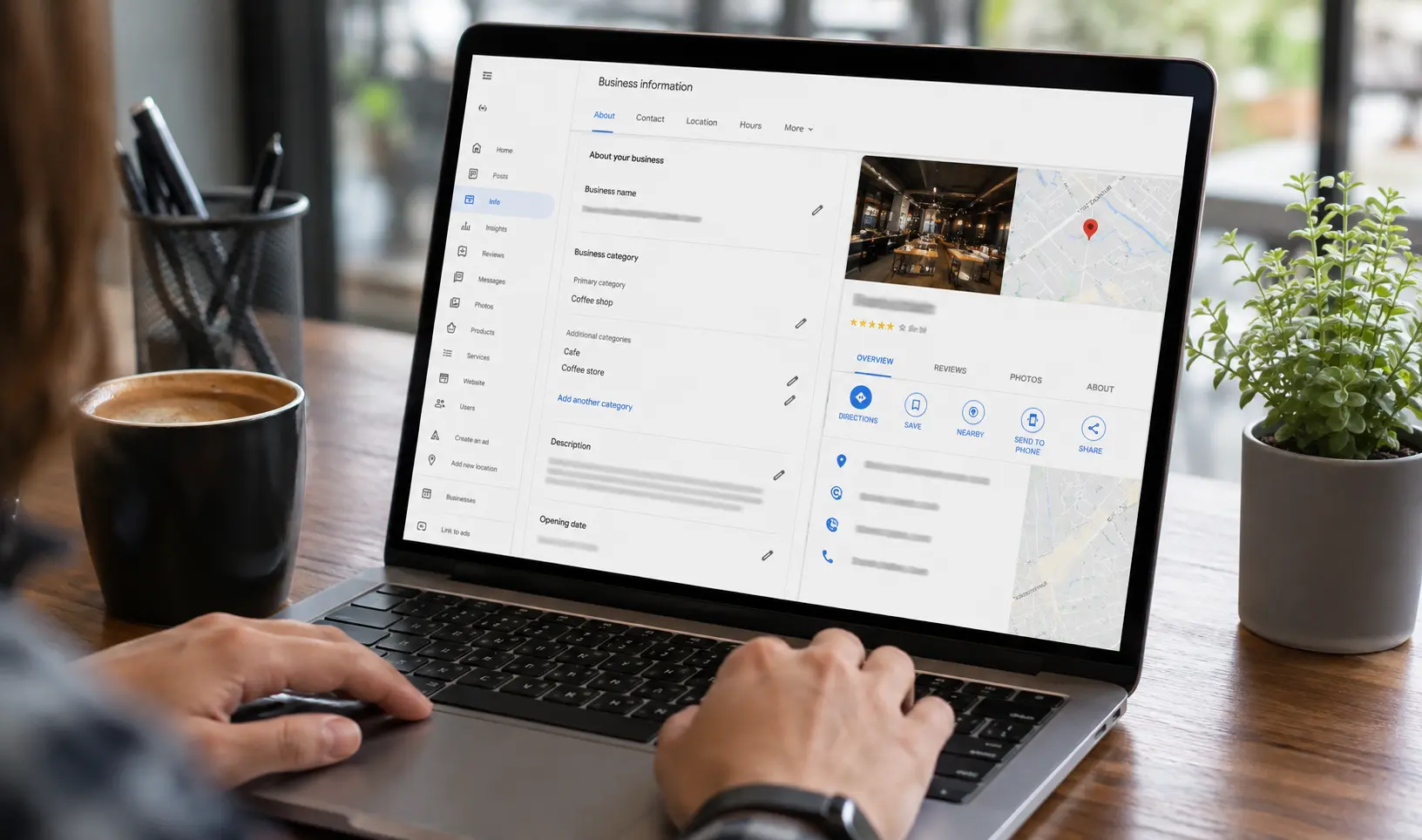
Google Business Profile Categories: A Complete Guide to Primary and Secondary Categories
Google Business Profile categories are one of the strongest local ranking signals you control. Learn the difference between primary and secondary categories, how many you can add, and how to pick the right ones to win the Local Pack.
Local SEO vs National SEO: The Core Difference
Local SEO and national SEO solve different problems for different businesses. This guide breaks down the ranking signals, real cost ranges in USD and EUR, timelines, and a side by side comparison table to help you choose the right strategy, or combine both.